


DAF Machine For Stainless Steel
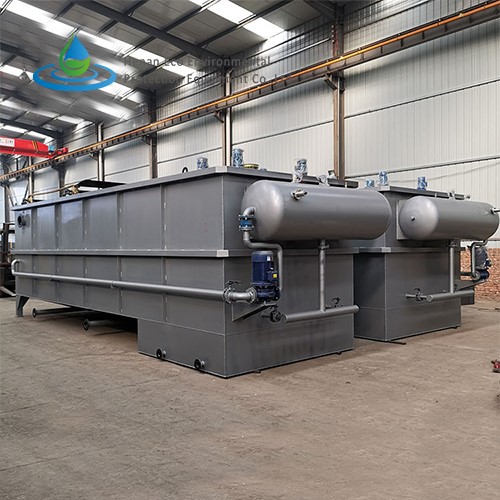
LK-GX DAF machine for Stainless steel is constructed of stainless steel, which has good corrosion resistance and a longer service life. It is a proven and effective physical/chemical technique for treating various wastewater streams
Description
Overview
LK-GX DAF machine for Stainless steel is a physical and chemical technology that can effectively remove organisms in various industrial wastewater, one of the most effective methods for water with a solid specific gravity close to 1.0. It is a liquid/solid or liquid/liquid separation process, which is used to remove tiny suspended solids, colloids, oils, and greases with a density close to water. It is an innovation combining traditional dissolved air flotation concepts with modern technology.
Features
| √ Stainless steel(304 or 316) components reduce wear and corrosion. |
| √ More efficient preprocessing and low operating costs in terms of power and maintenance. |
| √ Emergency stop and safety guards increase operator safety at work. |
| √ Use of high-quality pumps, calves, and electrical equipment throughout. |
| √ Modular design, completely independent, it can be linked with screening and sludge dewatering for higher efficiency. |
Application
| √ Biochemical effluent solid-liquid separation: anaerobic effluent solid-liquid separation, secondary sedimentation tank effluent treatment, etc. |
| √ Slaughterhouse, farm wastewater treatment: cattle, pigs, chicken, farms, slaughterhouse wastewater. |
| √ Purification: rivers, circulating water, etc. |
| √ High-concentration organic wastewater treatment: papermaking, leather, printing and dyeing, textile, pharmaceutical, etc. |
How it Works?
DAF machine for Stainless steel uses a dissolved air-in-water solution to remove contaminants. This solution is produced by injecting air under pressure into the recycle stream of clarified DAF effluent. The recirculated stream is then combined and mixed with incoming wastewater in an internal contact chamber, and dissolved air comes out of the solution in the form of micron-sized bubbles that attach to the pollutants. Air bubbles and contaminants rise to the surface and form a floating bed of material, which the surface skimmer moves into an internal hopper for further processing.

Parameters

Send Inquiry
You Might Also Like


