


What is filter press and how does it work?
Leave a message
 |
Author: Mike
Time: January 20, 2026
Introduction: I'm Mike, I've been deeply engaged in the field of wastewater treatment and environmental protection equipment for a long time, with extensive front-line experience. I focus on engineering implementation and operation optimization, sharing practical and applicable industry insights. |
Foreword
Solid-liquid separation is an indispensable part of modern industrial production and sewage treatment. Whether it is chemical, pharmaceutical, food processing, or municipal sewage treatment, efficient and reliable separation equipment can directly affect the production efficiency and environmental protection. Among the many solid-liquid separation equipment, filter press is widely used because of its simple structure, stable operation and remarkable filtration effect. If you want to know how this equipment works, which scenarios it is suitable for, how to calculate the selection? As well as its key role in sewage treatment and industrial production, then this article will take you deeper into the basic principle and application value of plate and frame filter press.
What is filter press?
Filter press is a kind of intermittent filtration equipment which realizes solid-liquid separation through pressure difference, the core principle is to use the filter plate and the filter frame to form a sealed filter chamber by arranging them alternately, the solid particles in the suspension are retained by the filter cloth to form a cake under the action of pressure, and the liquid is discharged through the filter cloth.
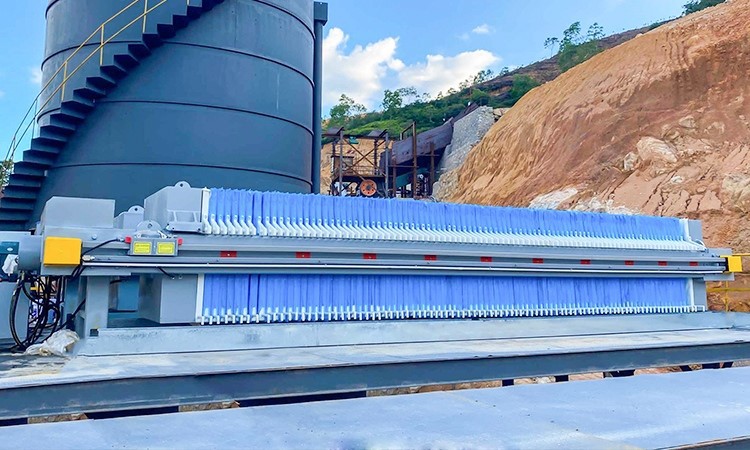
What is the core construction and how does it work?
core structure
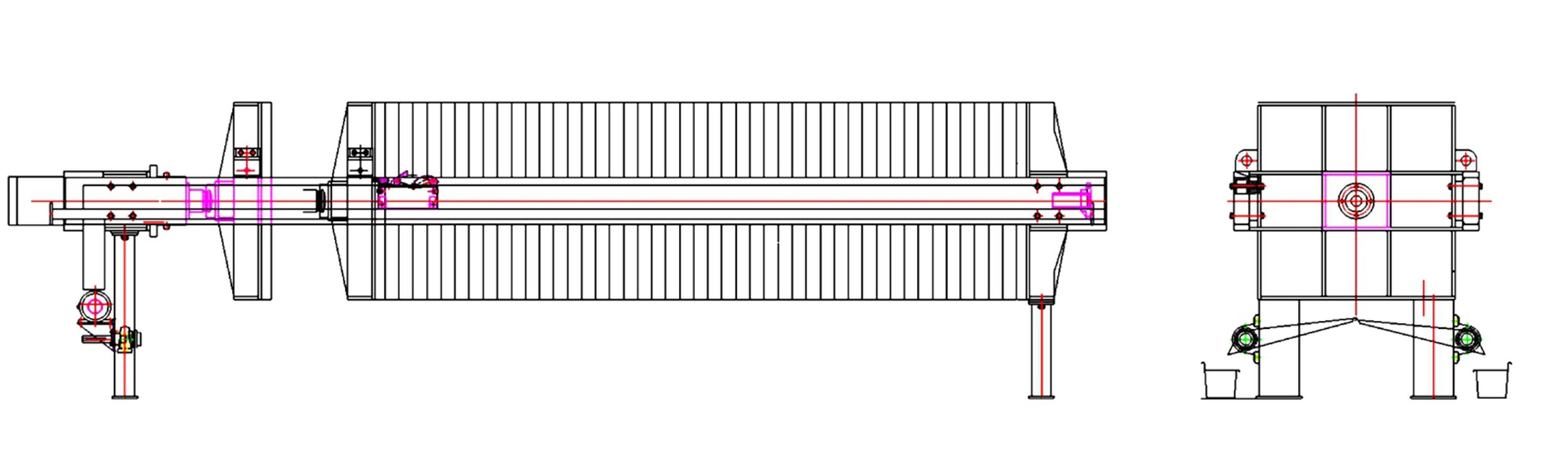
The core of the filter press consists of three main components: the filter plate, the filter frame and the filter cloth, which are manually/mechanically/hydraulically pressed to form a sealed filter chamber:
Filter Plate: with grooves on the surface to support the filter cloth and guide the filtrate to the outlet
Filter Frame: alternating with the filter plate to form the filter chamber, it is the space for holding the slurry and forming the cake
Filter Cloth: as a filter medium, it intercepts solid particles and allows the liquid to pass through.


Working Principle
Pressing and feeding: The hydraulic system presses the filter plate to form a good seal, the suspension is fed into the filter chamber by the feeding pump, the cake is formed on the filter cloth, and the clear liquid is discharged through the filter cloth to realize the solid-liquid separation.
Filtration and Pressing: As the filter cake gradually thickens and the filtration resistance increases, the pressure is adjusted to maintain a stable filtration speed and complete the filter cake pressing.
Cake washing: When washing is needed, close the water outlet valve of rinsing plate and open the water outlet valve of press-drying plate, so that the washing water passes through the cake under pressure to achieve the washing purpose.
Cake washing: When washing is needed, close the water outlet valve of rinsing plate and open the water outlet valve of press-drying plate, so that the washing water passes through the cake under pressure to achieve the washing purpose.
Drainage methods are divided into two types: open flow and concealed flow:
The open-flow type means that the filtrate is directly discharged out of the machine through the water outlet holes on both sides of the plate and frame, which is convenient for observing the water discharge situation;
The dark flow type is that the filtrate is discharged through the dark flow holes inside the plate and frame and the back top plate, which makes the water discharge more closed and neat.
Applicable Scenarios
filter press is widely used in all kinds of industries that require solid-liquid separation, whether in the fields of sewage treatment, chemical production, food processing, pharmaceuticals, mining and metallurgy, it can effectively separate liquids from solids, reduce the volume of wastes, recycle useful substances, and improve the production efficiency and environmental protection level.
It is especially suitable for solid-liquid separation of fine particles, high viscosity, and difficult-to-filter materials. In short, it is the ideal choice for any scenario that requires efficient dewatering and solid-liquid separation.
Municipal wastewater treatment: Used for sludge treatment to reduce the volume of sludge dewatering, (water content down to 70%-80%) for easy transportation and subsequent disposal.
Industrial wastewater treatment: such as paper mills, printing and dyeing plants, chemical plants, etc., to separate sludge and suspended solids from liquids, improve water quality and reuse rate.
Chemical and pharmaceutical industry: separation of solid by-products after chemical reaction, purification and recovery of useful chemicals, separation of dyestuff intermediates, filtration of fermentation broth.
Food processing industry: in the production of edible oils, fruit juices, sauces, etc., for the removal of impurities and suspended solids, solid-liquid separation of beer, wine and dairy products
Mining and metallurgy industry: tailings dewatering after ore leaching, slag dewatering in metal smelting.
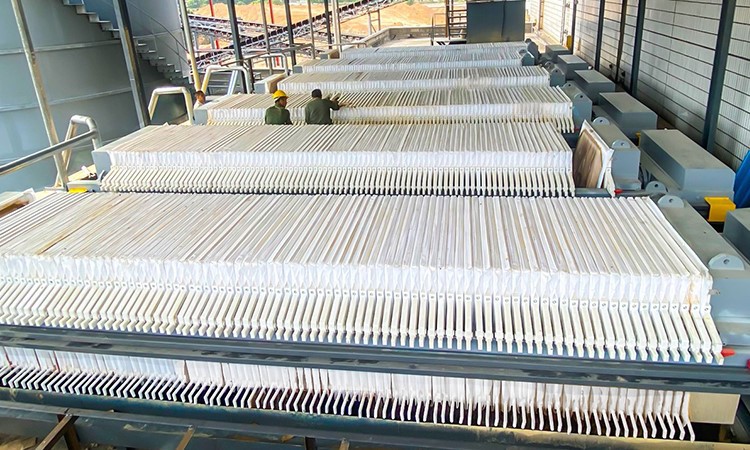

If you are facing low sludge dewatering efficiency or difficulties in equipment selection, a plate and frame filter press could be the right solution.We provide professional selection calculations, technical support, and reliable equipment solutions based on your actual operating conditions.


