What Are the Main Parts of a Submersible Mixer?
Leave a message
|
|
Author: Mike Wastewater Treatment Engineer Water Treatment Expert Time: March 31, 2026 Introduction: I'm Mike. I've been deeply engaged in the field of wastewater treatment and environmental protection equipment for a long time, with extensive front-line experience. I focus on engineering implementation and operation optimization, sharing practical and applicable industry insights. |

Submersible mixers play a vital role in wastewater treatment by ensuring proper mixing, preventing sludge settling, and maintaining stable process performance.
While performance parameters are important, the internal structure of the mixer is equally critical to its efficiency and reliability. This article provides a clear overview of the main components of a submersible mixer and explains how each part contributes to its overall performance and long-term operation.
What is a submersible mixer?
The Function of Submersible Mixers
Submersible mixers are widely used in water treatment systems-such as sewage tanks, sedimentation basins, equalization tanks, and anaerobic tanks-to ensure effective mixing, prevent sludge settling, and promote circulation. They help maintain uniform water quality and stable treatment performance.
Understanding the Advantages of Structure
A thorough understanding of the submersible mixer's structure facilitates the accurate diagnosis of faults, appropriate selection and installation, and standardized maintenance; this ensures the equipment's stability and reliability, extends its service life, and reduces operating costs.
Main Components
This article provides a detailed overview of the seven core components of submersible mixers specialized for wastewater treatment-including the motor, impeller, and shaft-covering their materials, functions, and key design considerations. It serves as a professional reference for the selection, installation, and maintenance of submersible
What Are the Main Parts of a Submersible Mixer?
Detailed Breakdown of Core Components

Motor
Type: Submersible Motor (Fully Enclosed)
Voltage: Customized according to site requirements (voltage & frequency, single-phase / three-phase)
Protection Grade: IP68
Insulation Class: Class F
Function: Powers the device and drives the impeller to rotate.
Cooling Method: Water-cooled for stable operation.
Impeller
Material: SS304 / SS316 / Cast Iron
Function: Generates water flow to achieve mixing and directional circulation.
Design Focus: Blade angle, diameter, and thrust all significantly affect mixing performance and efficiency.

Shaft
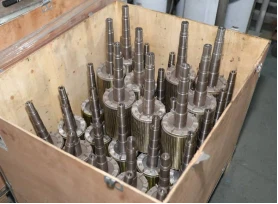
Material: SS420
Function: Connects the motor and the impeller, transmitting torque.
Features: High strength and corrosion resistance.
Mechanical Seal
Type: Double Mechanical Seal (SiC vs SiC)
Function: Prevents wastewater from entering the motor, ensuring reliable sealing and long-term operation.


Bearing
Type: NSK
Function: Supports rotation, offering wear resistance, low noise, and long service life.
Cable & Sealing Structure
Standard Length: 10 m, customizable upon request
Sealing: Watertight cable entry structure to ensure motor protection


Installation System
Options: 3 standard mounting systems, with customizable base-mounted system available
Guide Rod Sizes: 40×40×3 mm, 70×70×3 mm, 100×100×3 mm
Mounting Kits: TOP / MID / BOTTOM
Lifting Support: Hand winch included for easy hoisting
Features: Adjustable to multiple angles for safe and convenient maintenance
Every core component of a submersible mixer is closely connected to its overall performance, energy consumption, and service life.
Understanding these key components can help users make better decisions in equipment selection, installation, and maintenance.
Need a Reliable Submersible Mixer?
Get expert advice, customized solutions, and fast quotations within 24 hours.