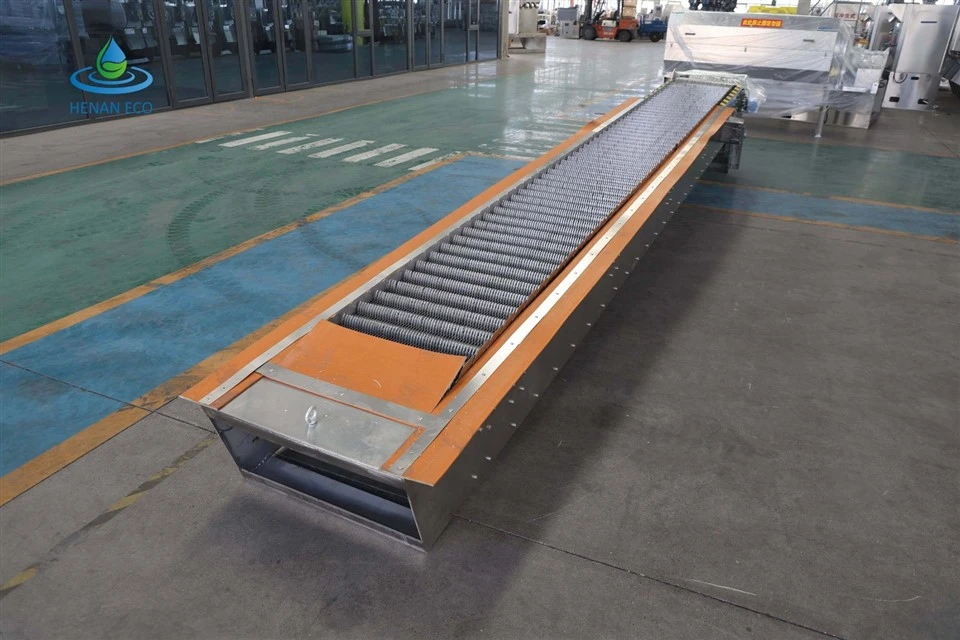
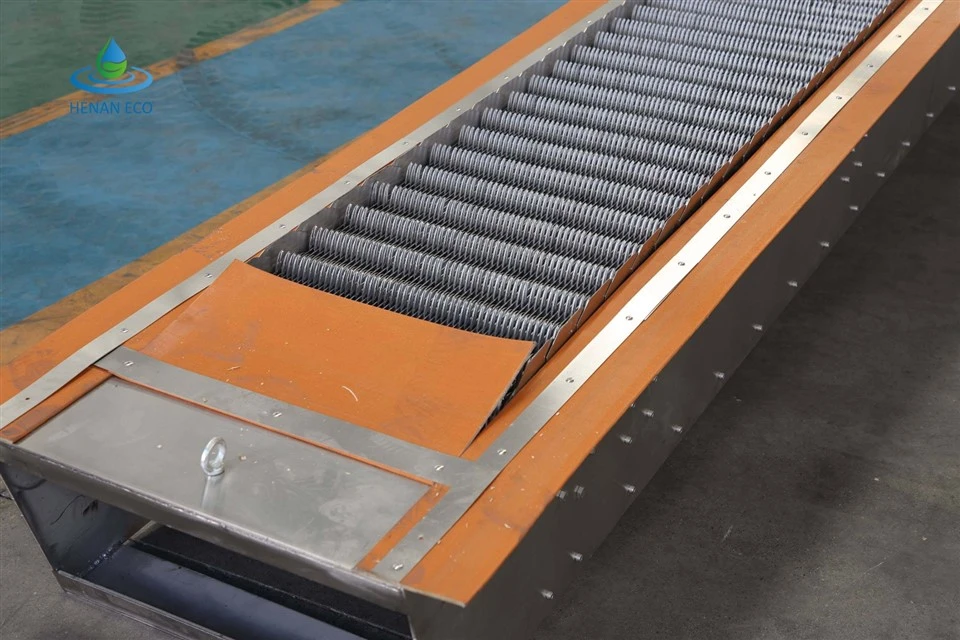
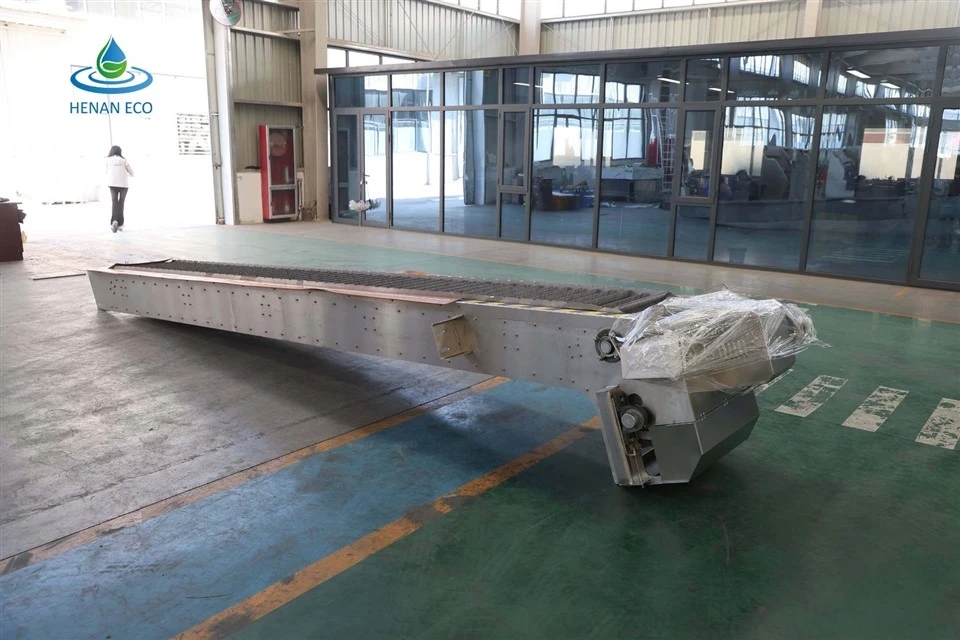
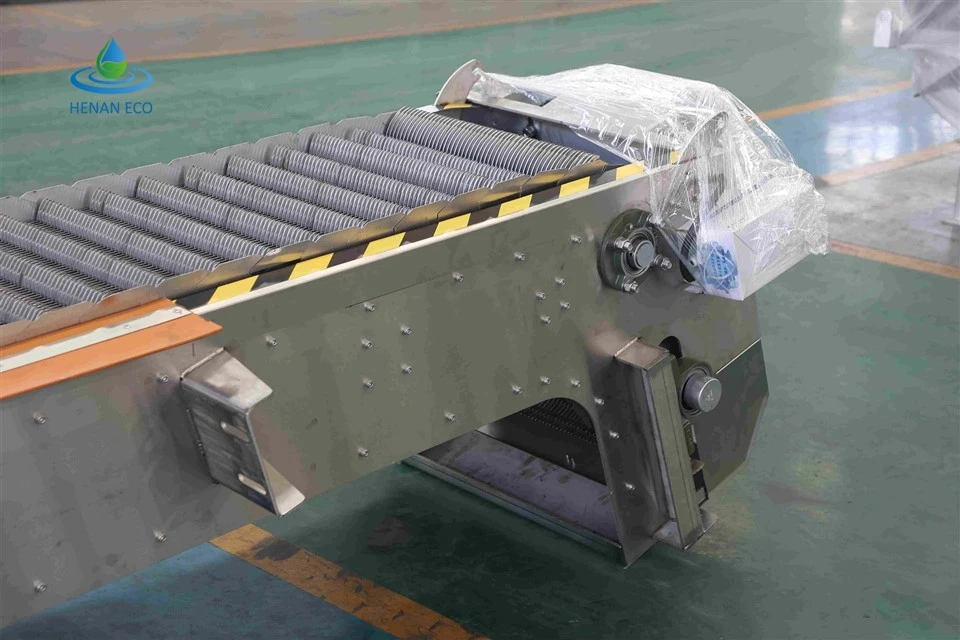
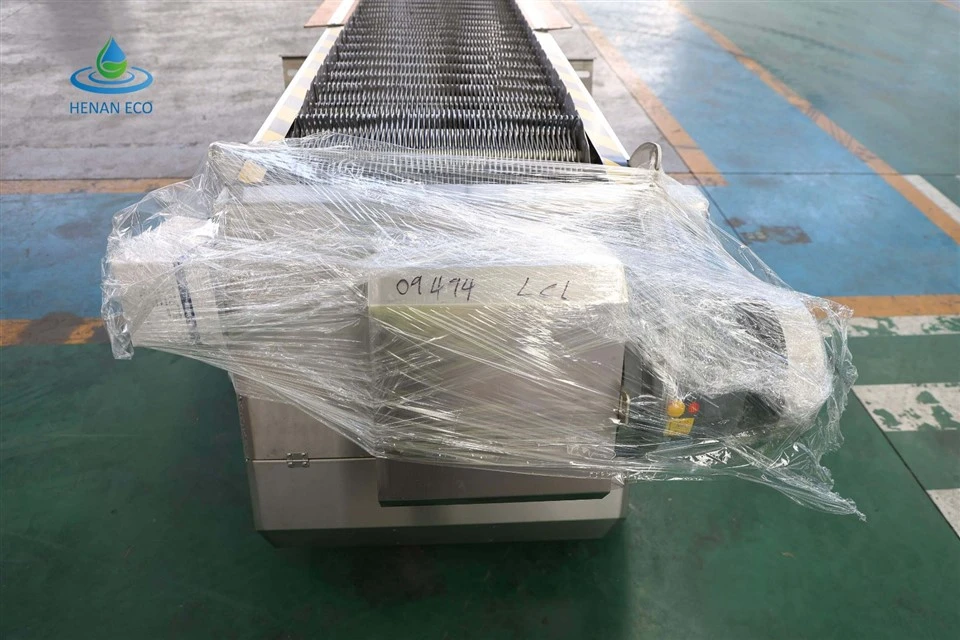
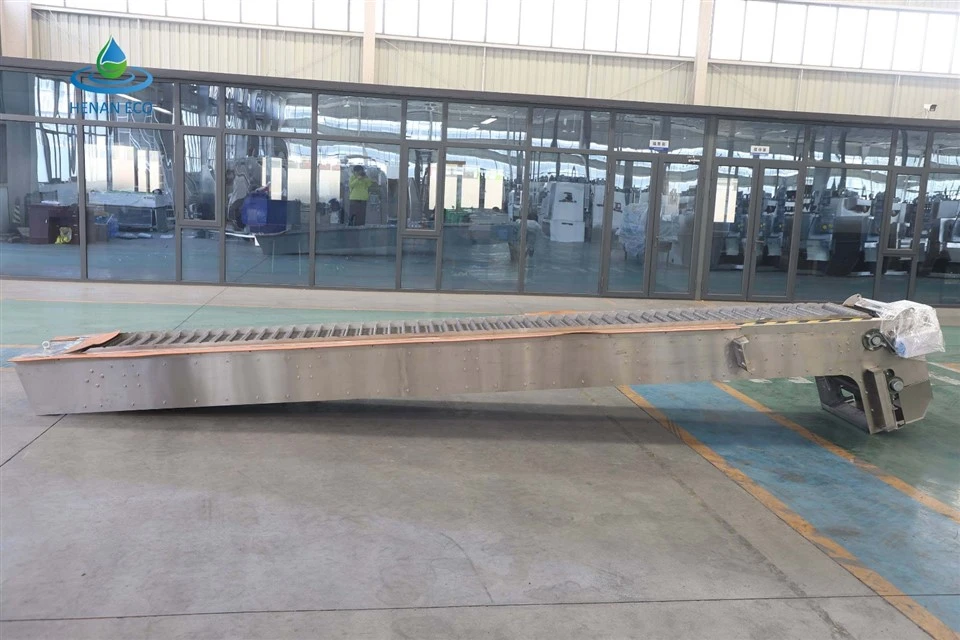
LK-GS Automatic Bar Screen
LK-GS automatic bar screen removes rags, plastics and coarse solids from wastewater to protect pumps. PLC control, SS304/SS316 and custom sizes available.
Description
Product Overview
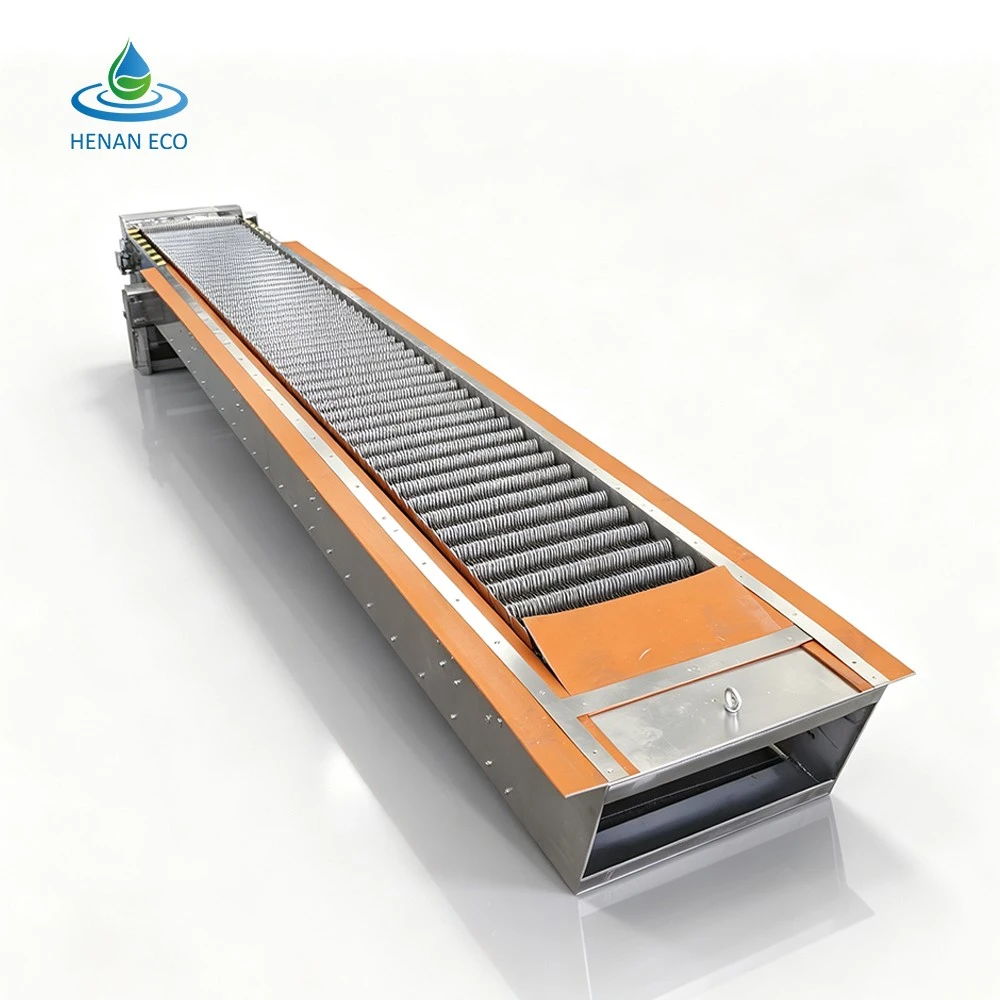
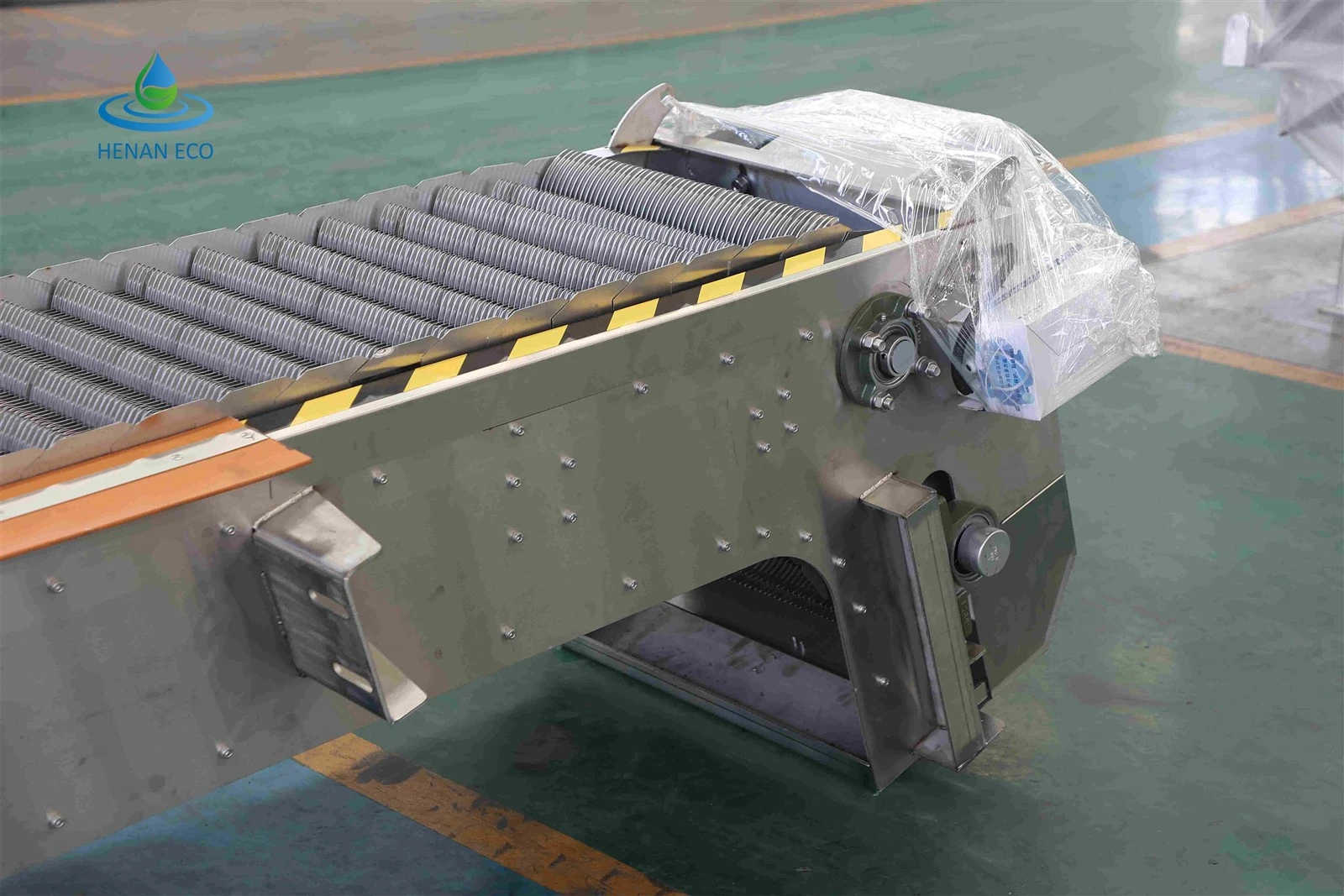
The LK-GS automatic bar screen is installed in an open channel at the inlet of a wastewater treatment plant or pumping station. Wastewater passes through the bar openings while rags, plastic, leaves and other coarse solids remain on the screen. A powered cleaning mechanism lifts the collected material to the discharge point at the top of the unit.
This first screening step keeps larger debris away from pumps, valves, pipework and downstream treatment equipment. The screen can run continuously or start when a timer or upstream/downstream level difference calls for cleaning. For sites that operate around the clock, it provides a practical alternative to manual raking.
Key Features
-
Automatic cleaning:The motor-driven rake travels across the working face of the bar rack, lifts the screenings and releases them at the discharge point. Once commissioned, the normal cleaning cycle does not require an operator at the channel.
-
Continuous-duty design: Cleaning intervals can be adjusted to suit the debris load. If the rake meets an obstruction, the overload protection can stop or reverse the drive before the unit attempts the cycle again.
-
Straightforward maintenance: An enclosed upper section helps contain moving parts and keeps the working area tidier. Routine checks focus on the drive, chain tension, rake assembly and lubrication points. An automatic lubrication option is available where required.
-
PLC control: The standard control cabinet supports timed operation and differential-level control. Operating status and alarms can be viewed on the HMI, and dry contacts can be provided for connection to a plant PLC or SCADA system.
-
Flexible discharge arrangement: Screenings normally fall through an inclined chute into a bin. Where the layout requires it, the screen can discharge to a shaftless screw conveyor, belt conveyor or screenings compactor. Chute height and discharge direction are confirmed during equipment selection.
-
Materials for the water conditions: Wetted components can be supplied in SS304 or SS316. Duplex stainless steel can be considered for more demanding wastewater. Final material selection should be based on chloride level, pH, temperature and the expected contaminants.
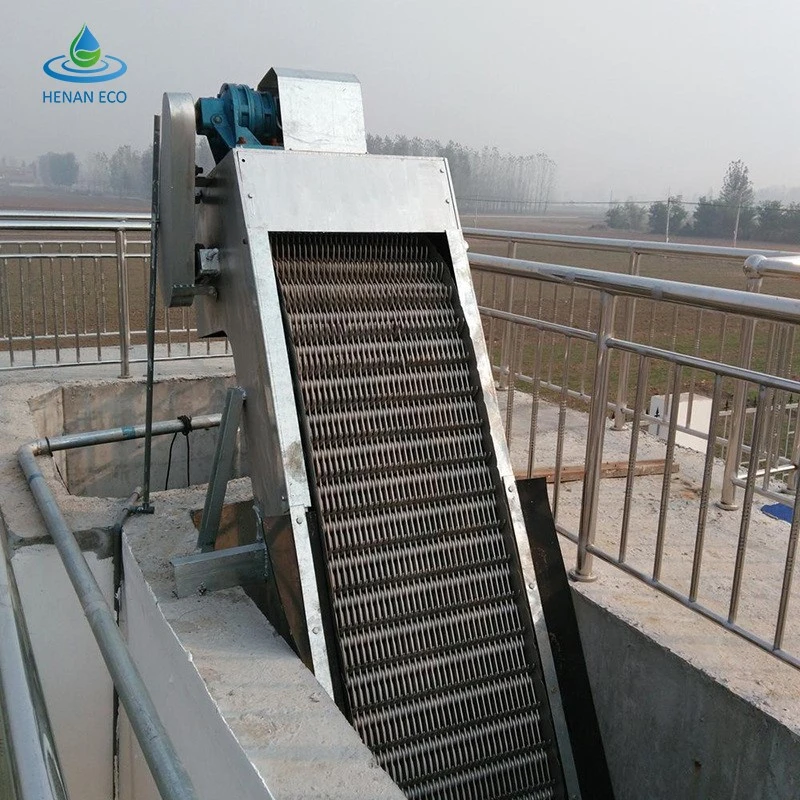
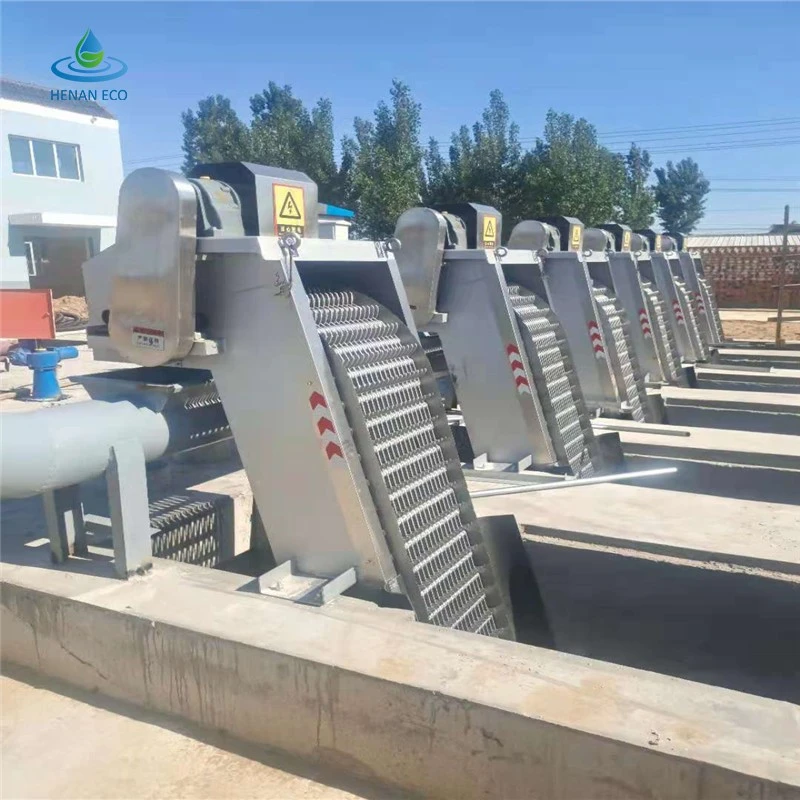
How the Automatic Bar Screen Works
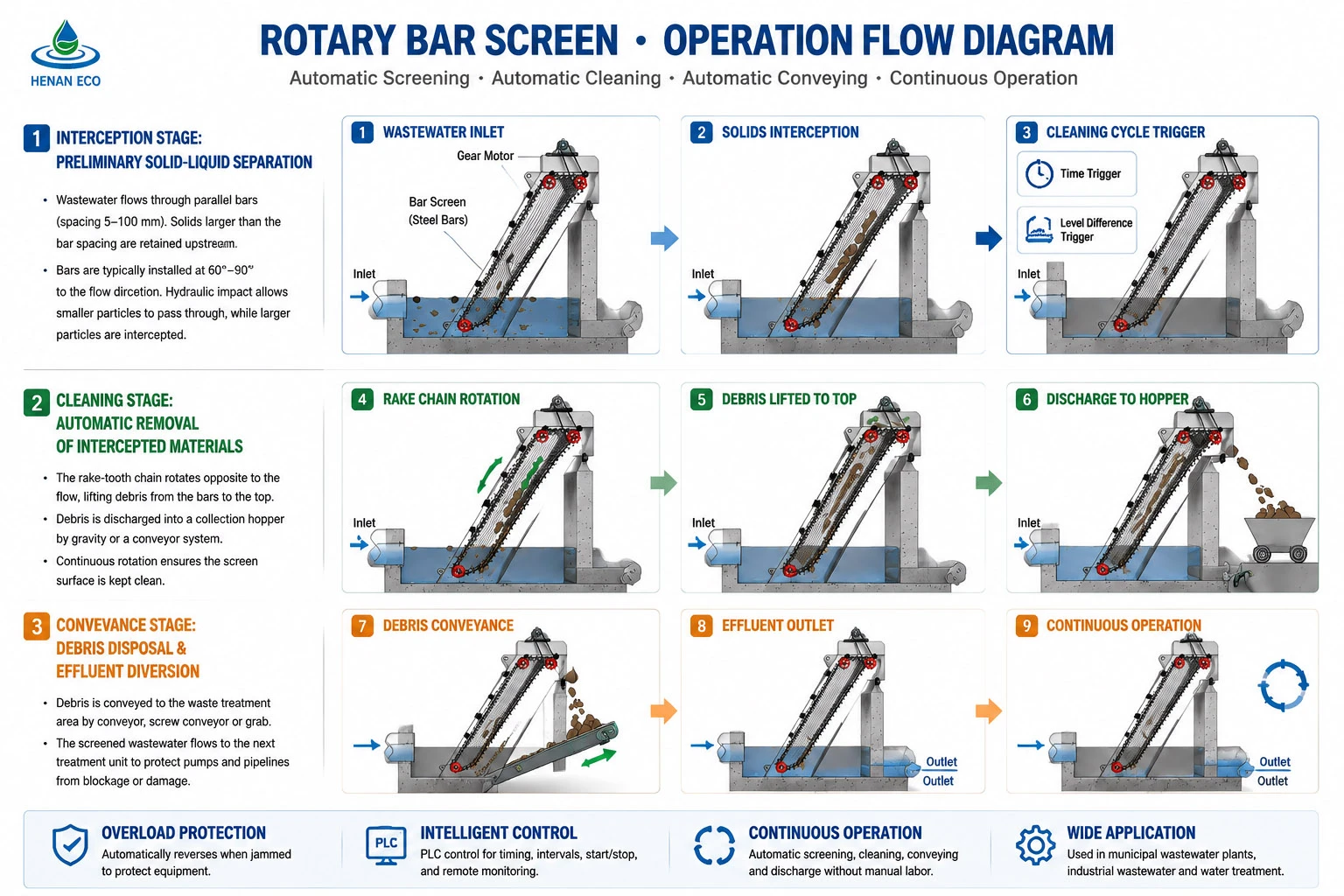
The Automatic Bar Screen cleans itself in a continuous, automatic loop – no manual labor needed.
Interception Stage: Preliminary Solid-Liquid Separation
- Interception Stage: Preliminary Solid-Liquid Separation
-
Bar screen filtration: Wastewater passes through parallel metallic bars (with clear spacings ranging from 5 mm to 100 mm). Solid impurities larger than the bar spacing (e.g., plastic bags, branches, rocks, etc.) are retained in the upstream zone of the screen.Trigger – The control cabinet launches a cleaning cycle on a timer, or whenever the water level difference signals a buildup.
-
Flow direction design: The bars are typically installed at an angle of 60° to 90° relative to the flow direction. The hydraulic impact of the flow allows smaller particles to pass through the openings, while larger particles are intercepted due to inertial collision against the bars.
2.Cleaning Stage: Automatic Removal of Intercepted Materials
- Rake-tooth / scraper cleaning:
-
Chain‑driven bar screen: The rake‑tooth chain rotates in the direction opposite to the flow. As the rake teeth pass through the bar spacings, they lift attached debris to the top of the screen, where it is flushed and discharged into a waste hopper.
-
Rotary bar screen: A continuously rotating rake‑tooth chain strips the intercepted solids from the bars, and the debris is collected by a screw conveyor at the bottom.
-
Gravity‑assisted self‑cleaning: In certain step‑type bar screens, the combined action of water scouring and the inclined screen surface allows debris to slide naturally into a collection area.
3.Conveyance Stage: Debris Disposal and Effluent Diversion
-
Debris conveying system: The separated solids are transferred to the waste treatment area via belt conveyors, screw conveyors, or grab buckets.
-
Effluent diversion: The screened wastewater is directed to subsequent treatment units (e.g., grit chambers, biological reactors) to prevent clogging of pipelines or damage to pumps by residual solids.
Built-in overload protection reverses the rake if it encounters a jam, then retries. Cycle timing, intervals, and remote monitoring are all managed from the PLC control cabinet. This simple, rugged cycle keeps the Automatic Bar Screen running unattended – delivering reliable self-cleaning, continuous operation, and drastically lower maintenance.
Models and Technical Data
|
Model |
Frame width |
Tank width |
Hydraulic Efficiency |
Moter KW |
||||
|
Bar Space |
Tank depth |
|||||||
|
3mm |
5mm |
10mm |
15mm |
1.5(m)~5(m)~7.5(m) |
||||
|
LK-GS400 |
300 |
400 |
0.27 |
0.36 |
0.48 |
0.54 |
0.37 |
0.37 |
|
LK-GS500 |
400 |
500 |
0.37 |
0.55 |
||||
|
LK-GS600 |
500 |
600 |
0.55 |
0.55 |
||||
|
LK-GS700 |
600 |
700 |
0.55 |
0.55 |
||||
|
LK-GS800 |
700 |
800 |
0.55 |
0.75 |
||||
|
LK-GS900 |
800 |
900 |
0.75 |
0.75 |
||||
|
LK-GS1000 |
900 |
1000 |
0.75 |
1.1 |
||||
|
LK-GS1100 |
1000 |
1100 |
1.1 |
1.1 |
||||
|
LK-GS1200 |
1100 |
1200 |
1.1 |
1.1 |
||||
|
LK-GS1300 |
1200 |
1300 |
1.1 |
1.5 |
||||
|
LK-GS1400 |
1300 |
1400 |
1.5 |
1.5 |
||||
|
LK-GS1500 |
1400 |
1500 |
1.5 |
1.5 |
||||
|
a)Driving Unit |
||||||||
|
1.The drive unit adopts the Huibang brand, with features of low noise, high efficiency and good sealing. The service life of the reducer should be over 10 years. 2.The machine adopts a shaft-mounted reducer for power transmission, and screw-type adjusting devices are fitted on both sides of the frame to equalize the tension of the drive chain. 3.The reducer bearings are well lubricated and have a service life of over 100,000 hours. The gear service factor of the reducer is ≥1.5. 4.Low-alloy steel and carburized gear,tooth surface hardness is no less than HRC58. 5.Working voltage is 380V,3 phase,50Hz,the protection grade is IP65,the rated power of the motor is 10%larger than the maximum power consumption,and the motor speed is not exceed 1500r/min. |
||||||||
|
b)Rack |
||||||||
|
1.One-piece rigid structure made of SUS 304 and structural steel,with sufficient strength and rigidity. No distortion occurs under the condition of 1.0m water level difference. 2.The rubber seals on both sides of the rack are used to prevent rubbish from passing the gap between the rack and the tank wall. |
||||||||
|
c)Traction chain and sprocket |
||||||||
|
The underwater guide rollers are reliable to prevent entanglement of dirt,such as grid slag. |
||||||||
|
d)Cleaning bar |
||||||||
|
1.304 SUS material,the tooth-shaped structure meets smooth unloading,and the returning bar after unloading is free of dirt. 2.The rubber cleaning scraper is arranged for cleaning after discharging gums,and the driving of the cleaning scraper is driven by the main driving device. |
||||||||
|
e)Cover |
||||||||
|
Equipped with a closed stainless steel cover,which is openable,convenient for daily maintenance and management. |
||||||||
Typical Application Fields
-
Municipal wastewater treatment plant pretreatment
-
Water intake screening of pumping stations
-
Industrial water treatment for food, beverage, slaughtering, textile and papermaking industries
-
Cooling water intake filtration
-
Stormwater overflow impurity interception
Control and Automation
Each device is fully tested and delivered with a complete control cabinet. The standard configuration includes main circuit breaker, motor overload protection, preset PLC automatic operation program, and water level difference sensor access. The touch screen interface displays real-time operating status, alarm information and operation logs. Dry contact interfaces are reserved to realize remote start-stop and fault signal feedback.
The high-level automation design ensures stable and high-efficiency screening performance, reducing manual intervention and allowing the operation team to focus on core plant management work.
Screenings Discharge and Handling
The standard arrangement uses an inclined chute to drop screenings into a collection container. For a more automated handling line, the bar screen can be supplied to work with the following equipment:
-
Shaftless screw conveyor - Transfers screenings horizontally or on an incline to the next handling point.
-
Screenings washing compactor - Washes and compacts the material to reduce volume and retained organic matter.
-
Dewatering press - Removes additional free water before the screenings are collected for disposal.
The discharge height, conveyor route and available maintenance space should be reviewed together. We use the site drawing and expected solids load to propose a workable equipment arrangement.
About the Manufacturer
Henan Eco Environmental Protection Equipment Co., Ltd. manufactures equipment and packaged systems for water and wastewater treatment. Our product range covers inlet screening, mixing, aeration, sludge dewatering, RO systems and complete treatment lines. We have more than 10 years of export experience and have supplied equipment for over 2,000 projects.
Customers are supported with equipment selection, drawings, production updates and commissioning guidance. Our systems are supplied to projects in the United States, Europe, Asia, South America and other markets.
Frequently Asked Questions
What is an automatic bar screen used for?
An automatic bar screen is mainly used in the pretreatment stage of wastewater treatment. It removes large solid materials before water enters pumps, tanks and biological treatment units.
How does a mechanical bar screen clean itself?
The rake system automatically moves along the screen surface, collects trapped solids and discharges them through the outlet chute. The cleaning cycle is controlled by PLC.
Can the bar spacing be customized?
Yes. The bar spacing can be selected according to wastewater conditions and the size of solids that need to be removed.
What materials are available for the bar screen?
SS304, SS316 and duplex stainless steel are available according to wastewater characteristics and corrosion requirements.
Send Inquiry
You Might Also Like