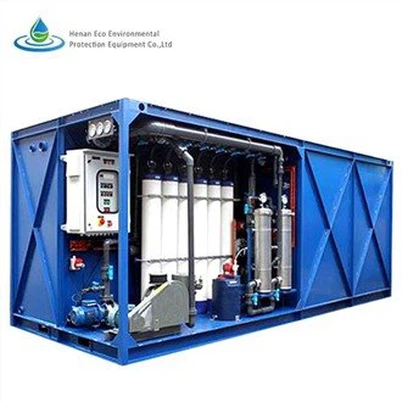
The Principle Of RO Water Treatment System
Leave a message
RO (Reverse Osmosis) is a membrane process that uses the selectivity of the RO membrane and uses the static pressure difference on both sides of the membrane as the driving force to overcome the osmotic pressure of the solvent (usually water), allowing the solvent to pass through and intercepting ionic substances to separate the liquid mixture. . There are two necessary conditions for the RO separation process: first, the applied pressure must be greater than the osmotic pressure of the solution (operating pressure is generally 1.5~10.5MPa); second, there must be a semi-permeable membrane with high water permeability and high selectivity. The pore size of the micropores on the RO membrane surface is generally less than 1nm, and it has a high removal rate for most inorganic salts, dissolved organics, dissolved solids, organisms and colloids.